Business Case
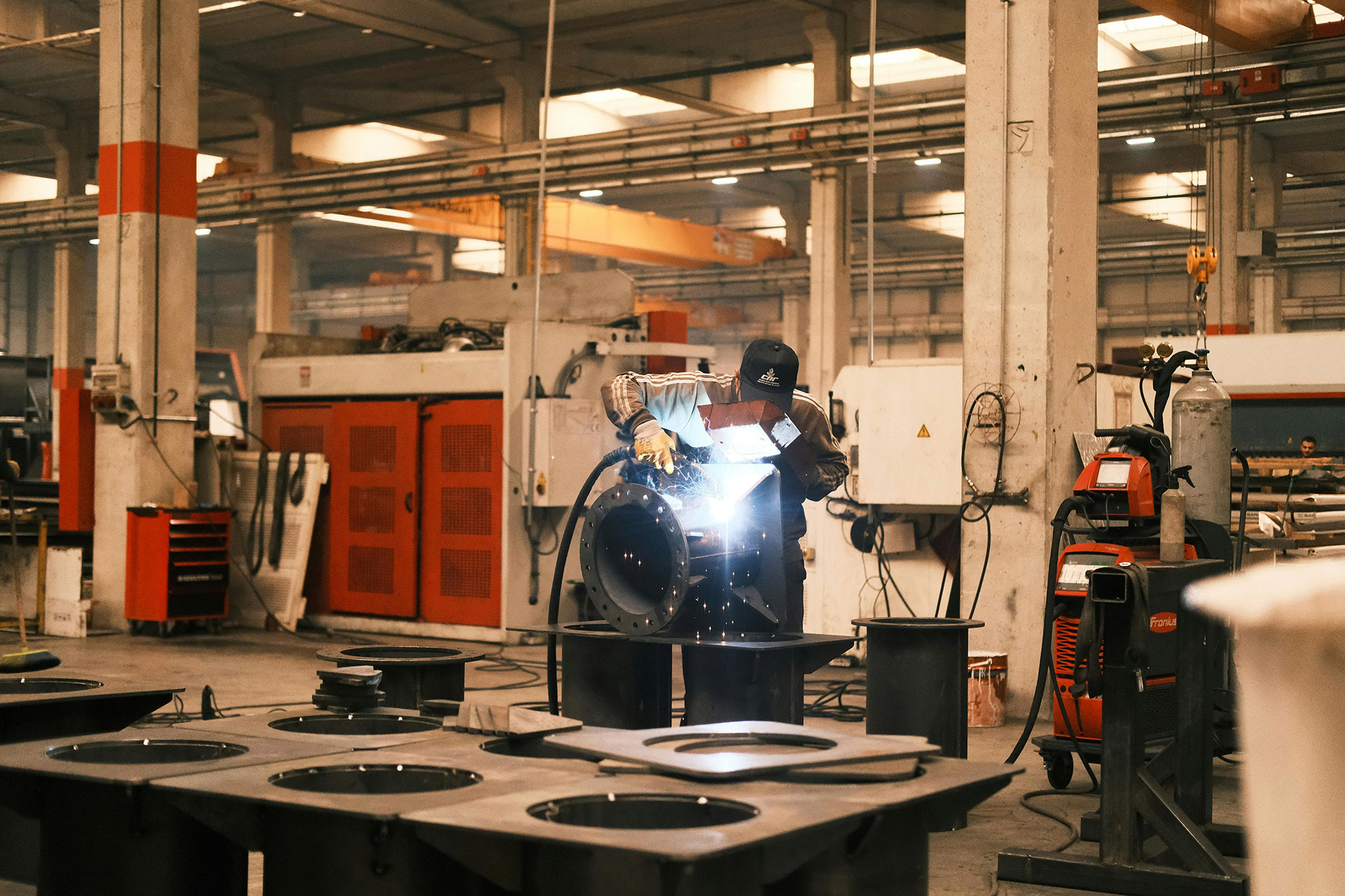
A forging MSME supplying ferrous, non‑ferrous, and alloy forged components to multiple industries was experiencing rising demand but struggled to scale output and delivery performance with its existing resources. The plant relied heavily on manual processes and operated with significant inventory, long lead times, and inconsistent production flow.
The goal was to partner with the leadership team under a structured Lean implementation program to improve operational efficiency and strengthen competitiveness. The roadmap began with a diagnostic assessment and value stream mapping to identify waste, bottlenecks, and improvement opportunities across the forging value stream.
Current State Observations
- Very low value‑adding ratio of about 3.3% due to large work‑in‑progress inventory and long throughput times across processes.
- Frequent material movement and multiple manual handling between cutting, forging, heat treatment, and machining operations.
- High changeover time, quality rework, and inconsistent production planning leading to poor delivery performance
Solution Synopsis
-
The Lean initiative began with value stream mapping and diagnostic analysis to identify waste, bottlenecks, and improvement opportunities across the forging value stream.
-
Systems were introduced to ensure continuous feeding of billets to the forging press, eliminating frequent stoppages and improving labour productivity.
-
Structured changeover preparation, tool readiness, and standardized die heating practices were implemented to reduce press changeover time using SMED principles.
-
Quality improvements were achieved through root cause analysis, tighter process parameter monitoring, and better control of billet weight and die cleaning practices.
Outcomes
Focused Lean improvements significantly enhanced productivity, quality, and delivery performance while using the same infrastructure and workforce.
Before
- Labor productivity was only about 8 kg per man‑hour due to inefficient workflow and frequent production interruptions.
- Changeover times in forging presses ranged from about 90 minutes, reducing available production capacity.
- High rejection and rework levels along with poor planning resulted in weak customer delivery performance.
After
- Labor productivity increased dramatically from about 8 kg per man‑hour to over 20 kg per man‑hour through improved workflow and continuous material feeding.
- Average changeover time reduced from about 90 minutes to less than 50 minutes through standardized preparation and SMED principles.
- Improved quality control and production planning reduced rejection levels and strengthened customer delivery performance.