Business Case
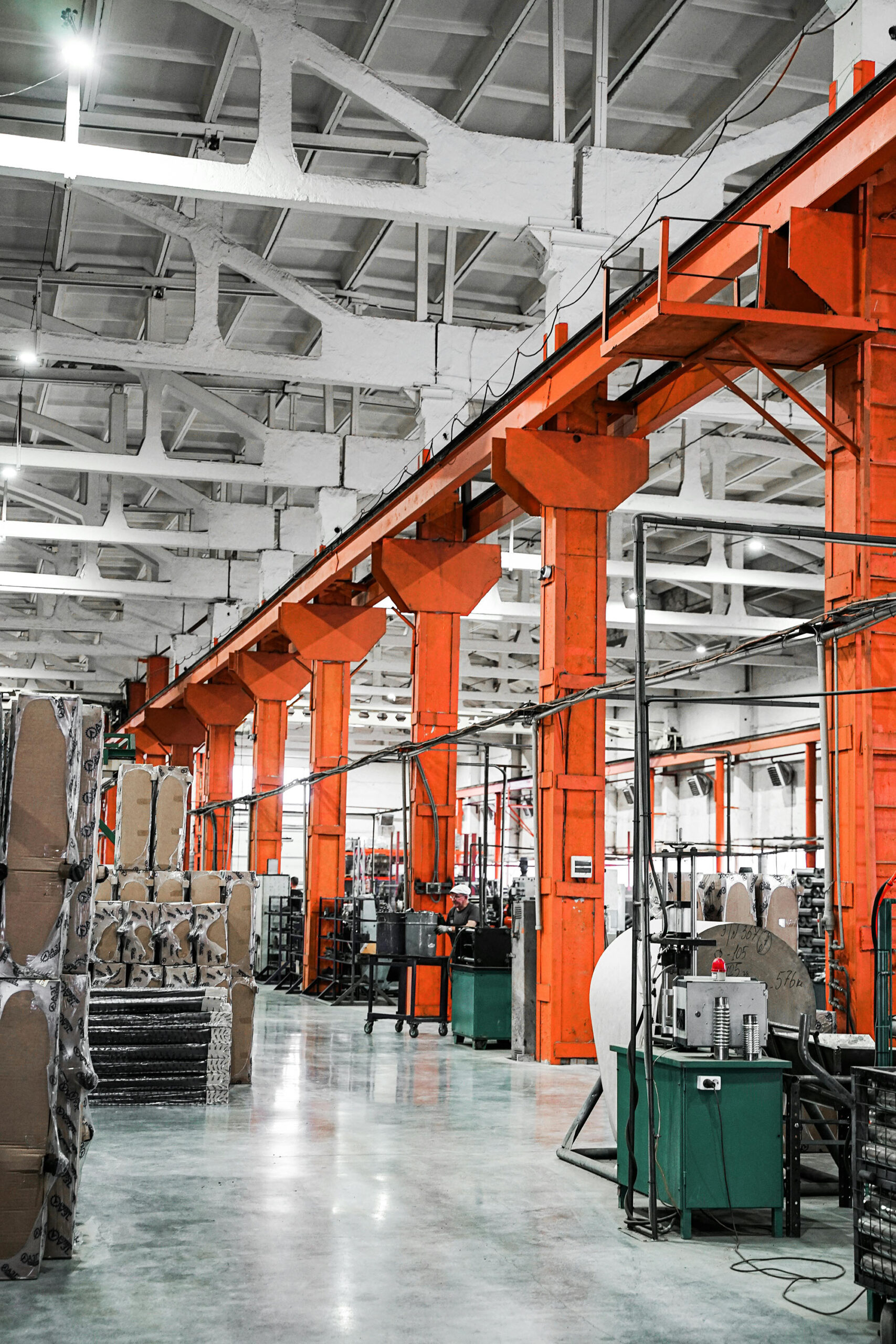
A fast-growing furniture manufacturer specializing in metal-based furniture operated a 55,000 sq. ft. manufacturing facility near Mumbai, India. Over the years, the company had expanded rapidly while serving both retail and online markets.
With strong demand and a growing order book, the company expected nearly 50% growth in turnover in the coming year. However, several operational challenges were affecting performance, including delayed deliveries, rising working capital, and margin pressures due to price reductions from online channel partners.
The goal was to streamline operations, improve throughput, and prepare the plant to support the next phase of business growth.
Current State Observations
To understand the operational challenges and identify improvement opportunities, our team conducted a gemba-based diagnostic assessment of material flow, methods of work, and shopfloor coordination.
- The pre-treatment process before powder coating was identified as the bottleneck in the overall production flow.
- The bottleneck process itself was frequently starved because upstream welding operations were not feeding material consistently.
- Large amounts of work-in-progress inventory were scattered across the shopfloor, while material handlers manually transported components over long distances.
Solution Synopsis
- Welding and sanding operations were reorganized into a cellular layout to enable online sanding and improve material flow.
- Workstations, input racks, and specialized trolleys were introduced to support single-piece flow and immediate feedback between welders and sanders.
- A supermarket system was established to ensure consistent feeding of welded sub-assemblies to the pre-treatment bottleneck.
- Kitting supermarkets were introduced before welding so that all parts required for each sub-assembly were available before production began.
- The pre-treatment bottleneck was improved through standardized loading patterns, rust-prevention spacers, and visual standards to maximize throughput and quality.
- Standard operating sequences and Andon signals were implemented to ensure consistent processing time in the pre-treatment tanks.
Outcomes
Operational improvements significantly improved production flow, reduced lead time, and released working capital tied up in inventory.
Before
- Bottleneck processes frequently starved due to inconsistent upstream production flow.
- Large work-in-progress inventory accumulated across the shopfloor, increasing handling effort and space congestion.
- Manufacturing lead time averaged around 5 days from fabrication to finished product.
After
- Pretreatment bottleneck throughput increased by nearly 30% through improved feeding and standardized operations.
- Manufacturing lead time reduced by 60%, from about 5 days to less than 2 days.
- Work-in-progress inventory reduced from 3.5 days to less than 1 day, releasing working capital and improving plant flow.